
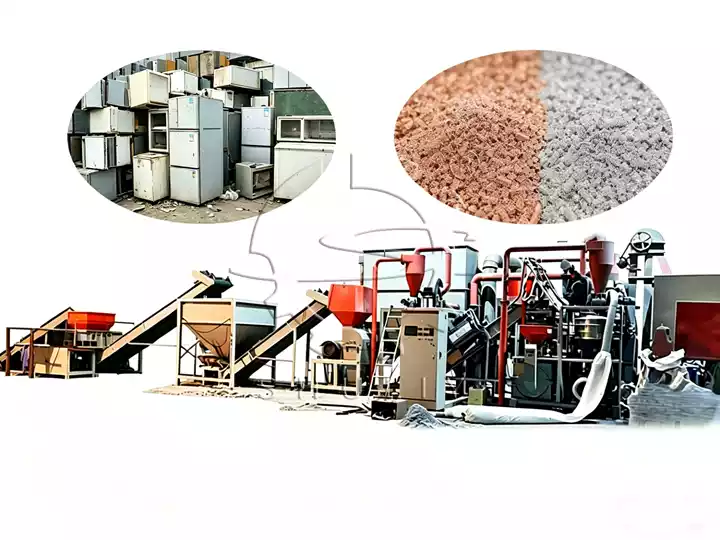
Con el crecimiento continuo de los residuos electrónicos globales (e-waste), los refrigeradores al final de su vida útil, un ejemplo típico de residuos de electrodomésticos grandes, presentan estructuras internas complejas y una amplia variedad de materiales. Los métodos tradicionales de desmontaje manual ya no pueden satisfacer las demandas de procesamiento eficiente y ecológico.
En este contexto, se desarrolló una línea de reciclaje de refrigeradores de residuos al final de su vida útil como una solución inteligente. Está diseñada específicamente para el desmontaje automatizado, trituración y clasificación y reciclaje en varias etapas de refrigeradores al final de su vida útil después de que se hayan retirado los compresores.
La línea completa de reciclaje de refrigeradores de residuos generalmente consta de hasta 15-20 unidades principales, integrando trituración, molienda, transporte, separación magnética, separación por corrientes de Eddy, clasificación de aire y sistemas de eliminación de polvo. Dependiendo de la configuración, la capacidad de procesamiento de una sola línea generalmente alcanza de 1 a 5 toneladas por hora (o capacidades personalizadas superiores). Las tasas de recuperación de metales pueden mejorarse significativamente para alcanzar niveles líderes en la industria, logrando efectivamente la reutilización de recursos y la reducción de residuos.
Después de un procesamiento sistemático, se pueden separar de manera confiable cuatro categorías principales de materiales:
- Metales mezclados de cobre y aluminio (metales reciclables de alto valor)
- Materiales ferrosos
- Materiales de aislamiento de espuma (poliuretano, etc.)
- Plásticos mezclados (que contienen pequeñas cantidades de caucho)
Este sistema se utiliza ampliamente en plantas de reciclaje ecológicas modernas y sirve como equipo clave para lograr la “eliminación inofensiva y recuperación de recursos” de electrodomésticos desechados.
Aplicación de la línea de reciclaje de refrigeradores de residuos
La línea de reciclaje de refrigeradores de residuos es principalmente adecuada para los siguientes sectores:
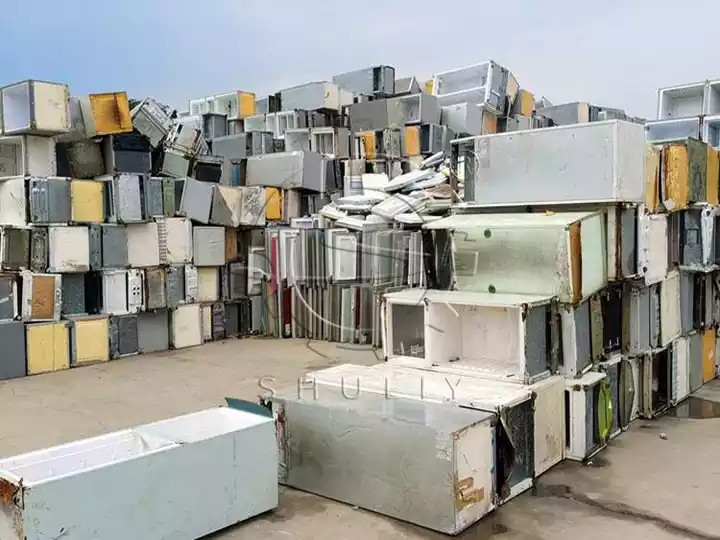
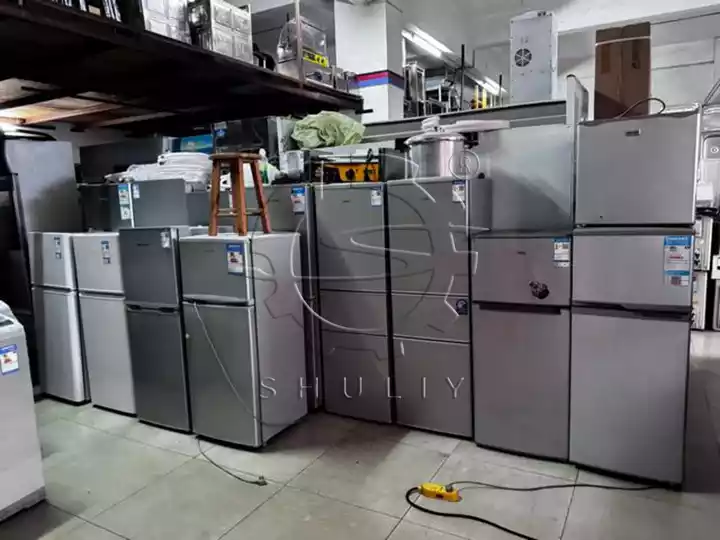
- Todo tipo de refrigeradores, congeladores y equipos de refrigeración usados
- Materiales preprocesados de electrodomésticos usados con compresores removidos
- Centros centralizados de desmontaje y recuperación de recursos de residuos electrónicos
- Empresas integradas de reciclaje de chatarra metálica y plásticos
- Parques industriales de protección ambiental y procesamiento de recursos renovables
Ya sea en sistemas de reciclaje urbanos o en centros de desmontaje a escala industrial, este equipo permite un procesamiento a gran escala y continuo.
Ventajas de la línea de reciclaje de refrigeradores de residuos
- Sistema de control altamente automatizado: utiliza control PLC centralizado para permitir la operación coordinada de toda la línea de producción, con alimentación y clasificación automáticas. Esto reduce la intervención manual y mejora la estabilidad operativa.
- Trituración eficiente y procesamiento de alta capacidad: el triturador de doble eje emplea un diseño de baja velocidad y alto par, lo que lo hace ideal para triturar carcazas y revestimientos de refrigeradores de gran volumen y estructura compleja.
- Sistema de clasificación de precisión en varias etapas: integra múltiples tecnologías de separación, incluyendo separación magnética, separación por corrientes de Eddy y clasificación de aire, para lograr una separación eficiente de metales, plásticos y espuma.
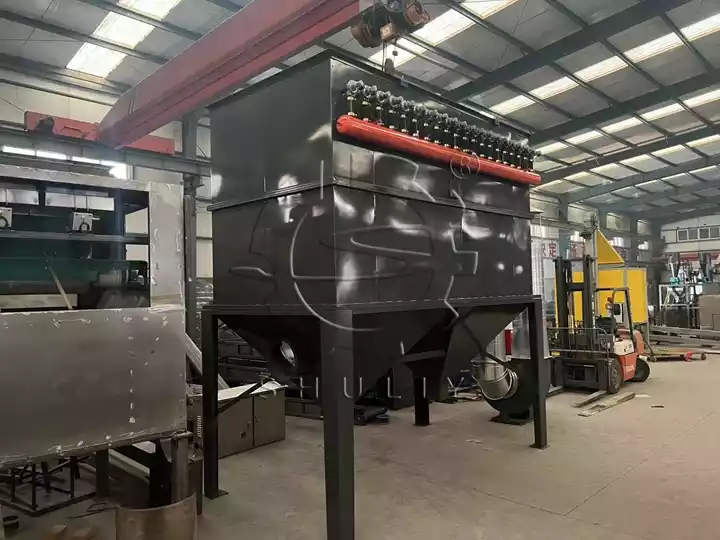
- Sistema de recolección de polvo ecológico integral: equipado con un sistema de extracción de presión negativa sistema de recolección de polvo por pulso para controlar eficazmente la contaminación por polvo y mejorar el ambiente de trabajo.
- Estructura compacta, operación estable y duradera: la línea de producción presenta una distribución científicamente optimizada, y el equipo está construido con materiales resistentes al desgaste de alta resistencia, lo que lo hace adecuado para operación continua a largo plazo.
¿Cómo funciona la línea de reciclaje de refrigeradores de residuos?
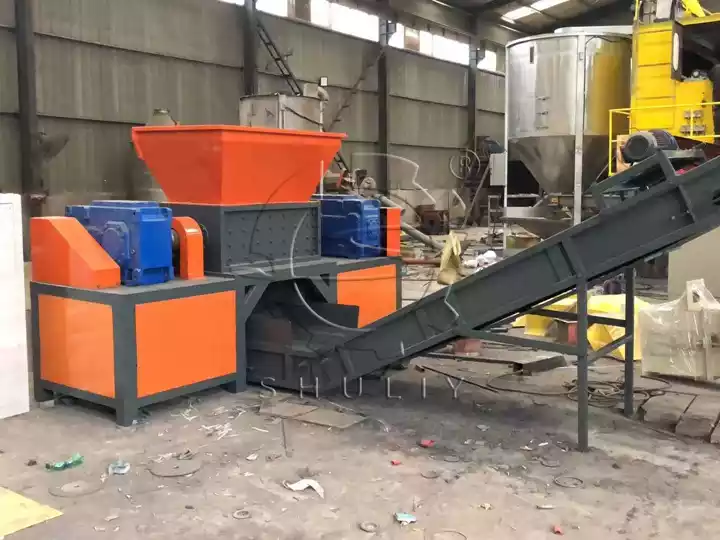
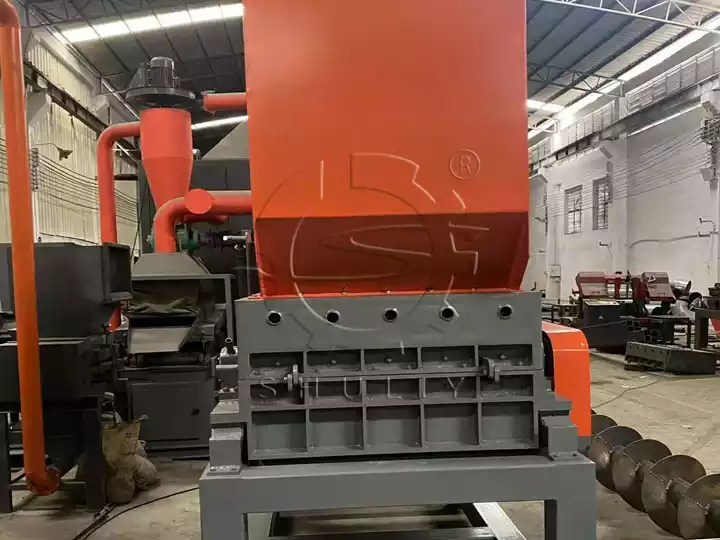
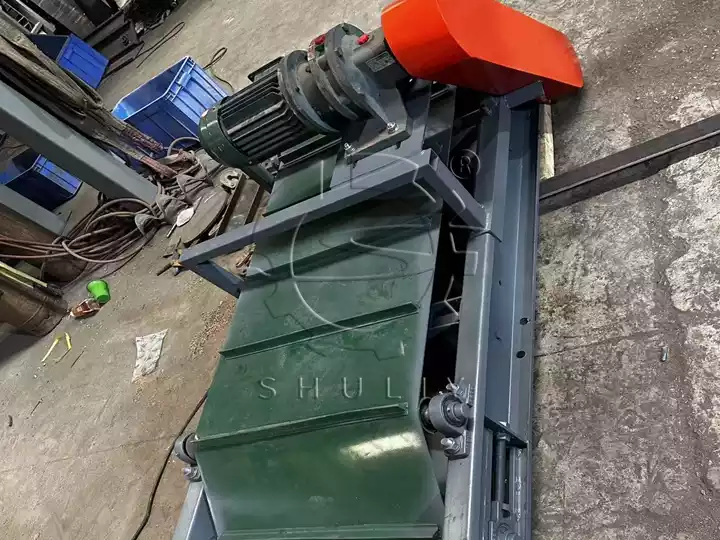
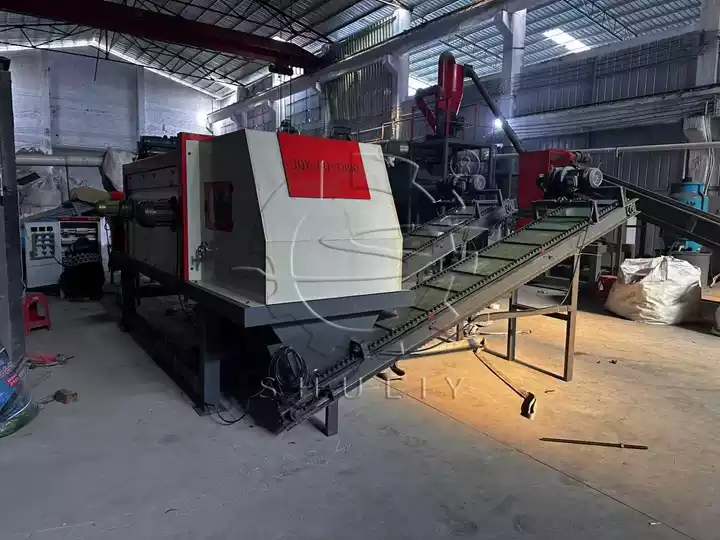
Después de retirar los compresores, los refrigeradores desechados ingresan al sistema de reciclaje. Primero, se transportan a un triturador de doble eje para trituración primaria, que descompone toda la unidad en piezas más pequeñas. Luego, pasan a un trituradora de impacto de alta velocidad enfriada por agua para trituración fina secundaria.
Después de triturar, el material entra en un sistema de clasificación en varias etapas:
- El equipo de separación magnética se usa para separar metales ferrosos.
- La clasificación de aire elimina espuma y plásticos ligeros.
- Equipamiento de separación por corrientes de Eddy se utiliza para recuperar metales no ferrosos como cobre y aluminio.
- Finalmente, el sistema clasifica y produce plásticos y materiales residuales mezclados.
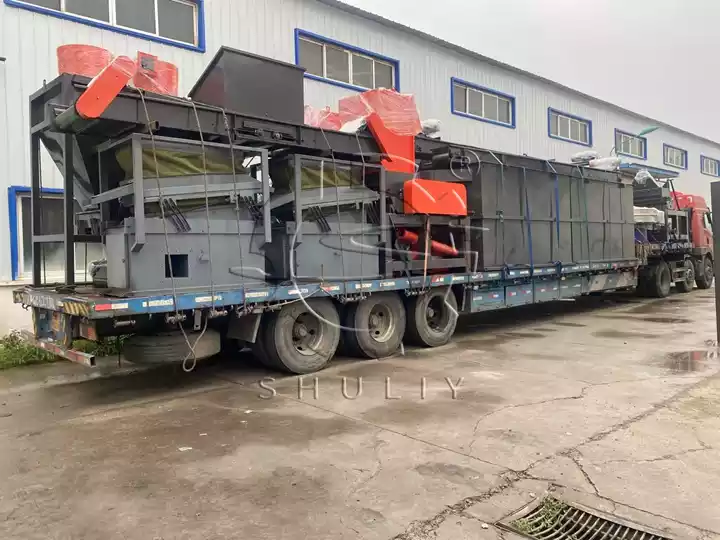
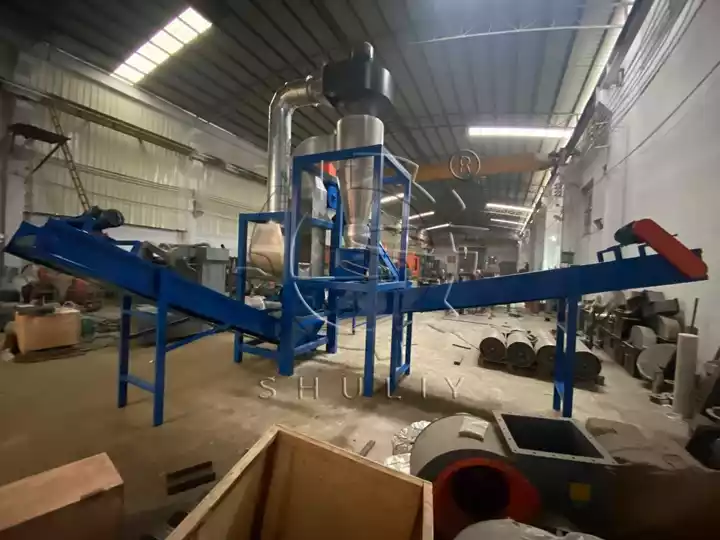
Flujo de proceso y equipos clave
Refrigeradores de chatarra → Correa transportadora → Trituración de doble eje → Correa transportadora → Trituración por impacto enfriada por agua → Transportador cerrado → Clasificación de aire → Separación magnética → Separación por corrientes de Eddy → Separación de espuma → Clasificación de plásticos → Recuperación de metales → Salida de producto terminado
- Trituradora de doble eje: utilizado para trituración primaria de unidades completas; presenta un diseño de bajo velocidad y alto par capaz de procesar carcazas de refrigeradores grandes y componentes estructurales de metal.
- Trituradora de impacto de alta velocidad enfriada por agua: utilizado para molienda fina secundaria para reducir el tamaño de partícula, mejorar la eficiencia de clasificación posterior y controlar eficazmente el aumento de temperatura del equipo.
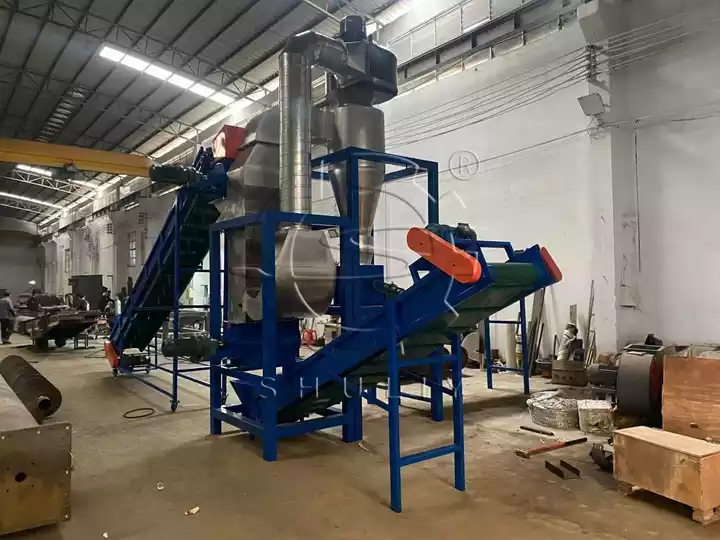
- Clasificador de aire: separa materiales ligeros (espuma, ciertos plásticos) en función de las diferencias en la densidad del aire.
- Separador magnético suspendido: adsorbe automáticamente metales ferromagnéticos para lograr una eliminación eficiente del hierro.
- Separador por corrientes de Eddy: separa metales no ferrosos como cobre y aluminio para aumentar el valor de recuperación de metales.
- Sistema de recolección de polvo (Pulso ciclón): un diseño de recolección de polvo de doble etapa que reduce eficazmente las emisiones de polvo y cumple con los requisitos de protección ambiental.
Matokeo ya mwisho:
- Metales mezclados de cobre y aluminio
- Metales ferrosos
- Materiales de espuma
- Plásticos mezclados (que contienen una pequeña cantidad de caucho)
Contáctenos
In addition to our waste refrigerator recycling lines, we offer a wide range of proven recycling equipment systems. These include circuit board recycling production lines, as well as production lines for recycling copper and aluminum radiators and heat sinks, designed to meet the needs of precise sorting and high-value recovery for various materials.
Contamos con amplia experiencia en la industria y podemos personalizar la ingeniería. Basándonos en las características de su materia prima, requisitos de capacidad de producción y estándares ambientales, ofrecemos servicios integrales que van desde el diseño de soluciones y configuración de equipos hasta la instalación y puesta en marcha. Si busca una solución confiable para la recuperación de recursos, no dude en contactarnos en cualquier momento.