
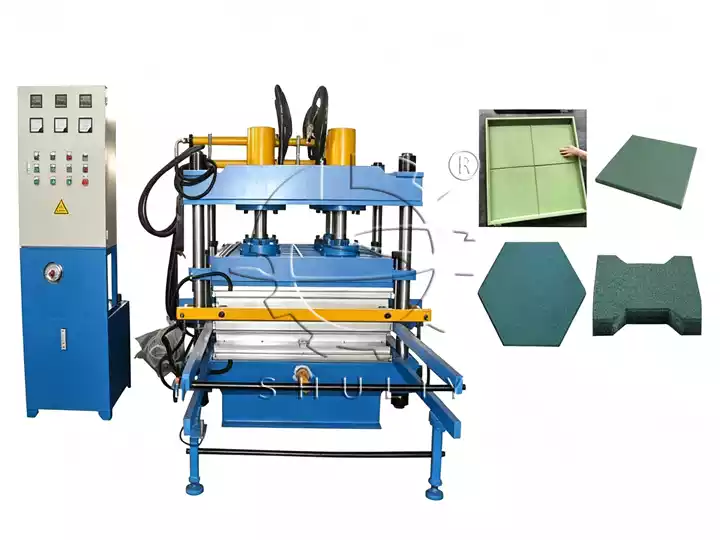
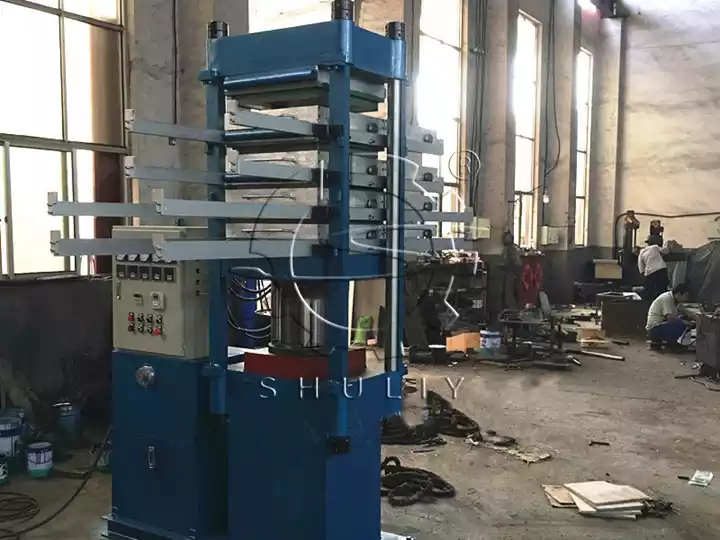
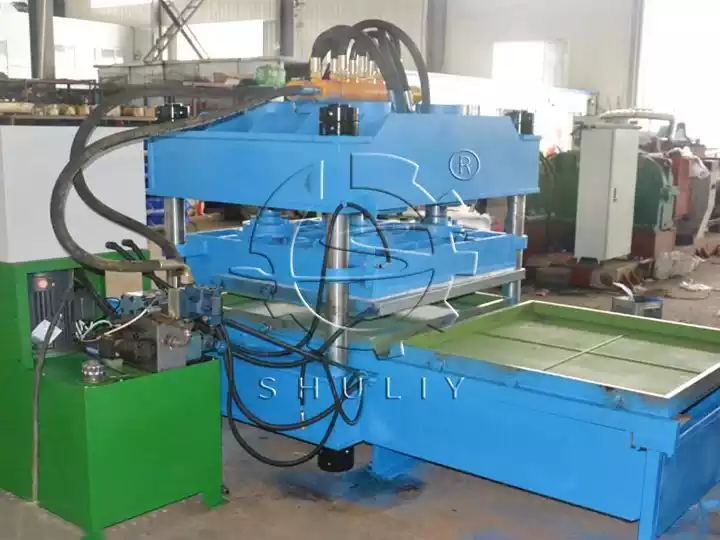
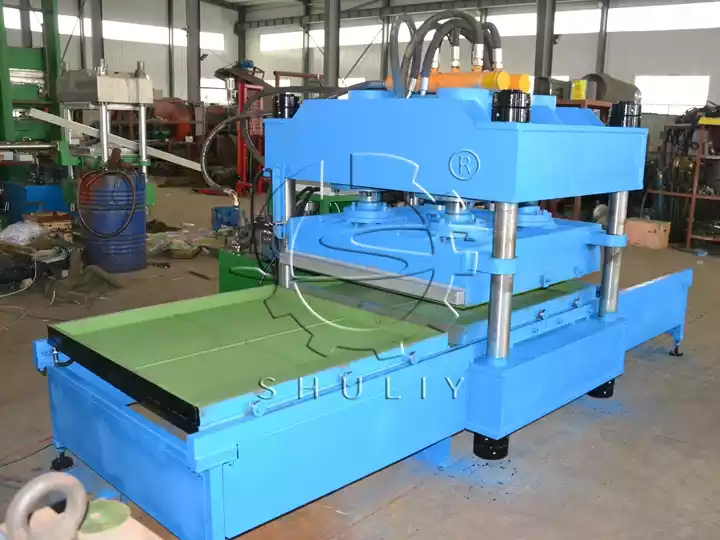
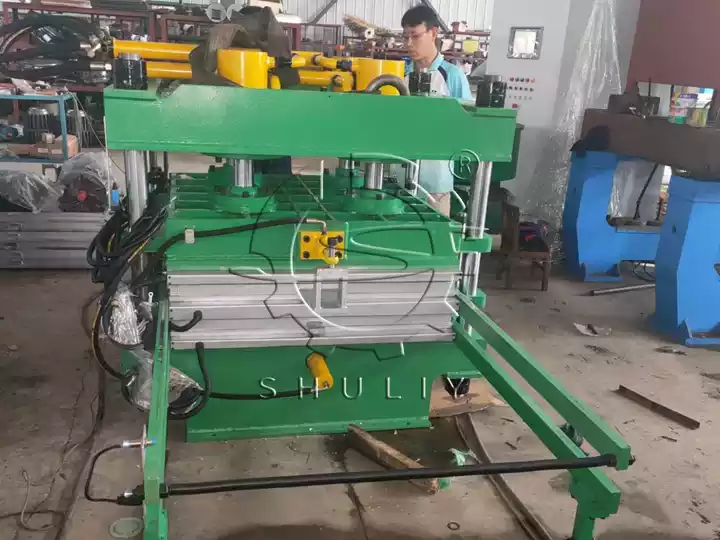
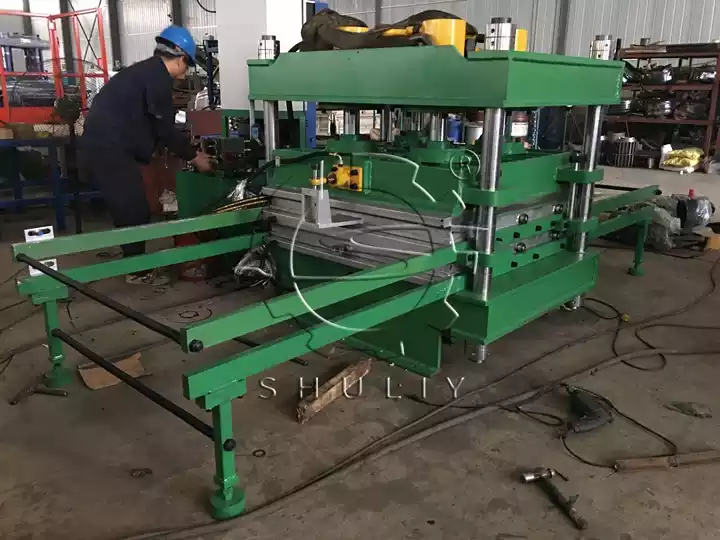
The rubber tiles making machine is a purpose-built hydraulic hot press machine engineered for manufacturing colored rubber floor tiles, rubber bricks, rubber pavers, and rubber mats. It integrates heating, pressing, molding, and curing into a single continuous process, eliminating the need for separate processing equipment.
The 120-ton model delivers a production capacity of 12–16 pieces of 1000×1000 mm rubber tiles per hour, making it a high-efficiency solution for both small-scale workshops and medium-volume rubber flooring factories. Using recycled rubber granules from waste tires as the primary raw material, this machine produces non-slip rubber flooring for playgrounds, gyms, walkways, and outdoor commercial spaces.
A complete production line requires only 4–5 operators, keeping labor costs low and the overall investment threshold accessible. With no three-waste (wastewater, waste gas, solid waste) emissions during operation, the rubber tiles making machine is an environmentally friendly and increasingly popular equipment choice for waste tire recycling and rubber resource reuse businesses.
Who Should Buy a Rubber Tile Vulcanizing Press?
Many buyers wonder whether a rubber tile production line fits their business before setting‑up a factory. This rubber tires making machine targets rubber product manufacturers, waste‑tire recycling enterprises, and entrepreneurs planning to launch small‑scale rubber tile plants.
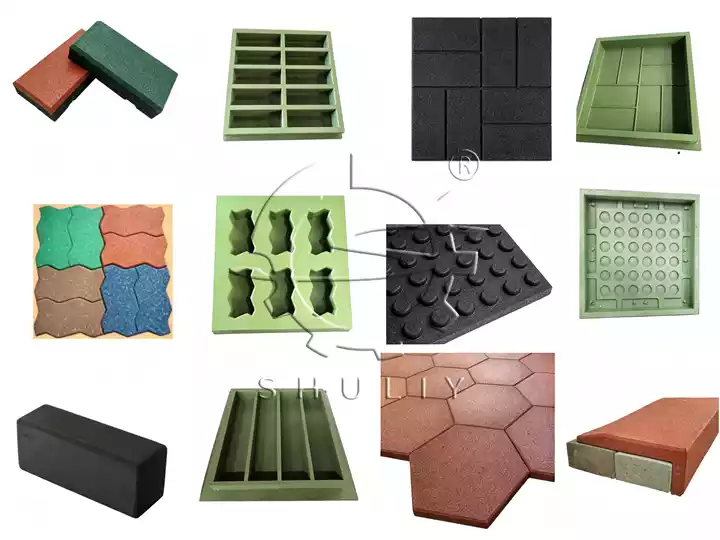
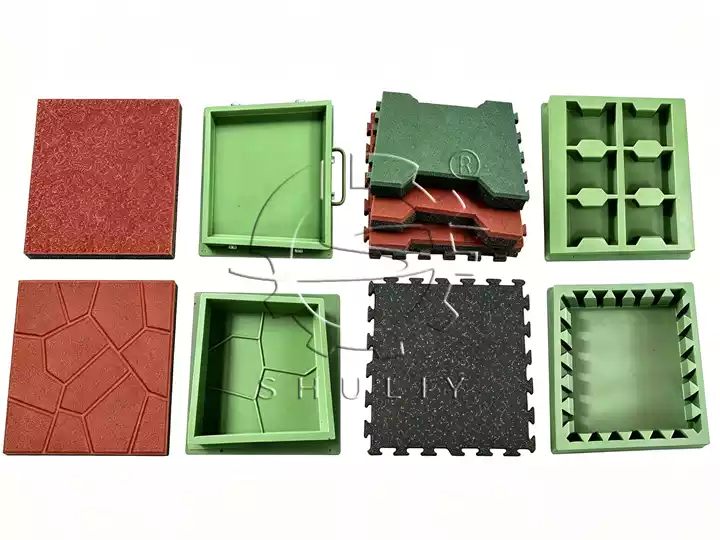
- Available Products: Colored rubber floor tiles, rubber bricks, rubber pavers, rubber mats and interlocking rubber tiles. Custom patterns, thicknesses and colors are supported.
- Application Scenarios: Playground flooring, gym anti‑slip floors, school sports grounds, outdoor walkways, parks, residential sidewalks and industrial workshop anti‑slip surfaces.
- Available Tile Sizes: Common dimensions include 300×300 mm, 500×500 mm, 1000×1000 mm with thickness ranging from 10‑45 mm. Multiple specifications can be achieved by changing molds.
Core Advantages of Rubber Tiles making machine
- Integrated heating, molding and curing: It finishes heating, pressing and vulcanizing in one step. PLC‑HMI enables accurate temperature & time control. New operators can run it after brief training, cutting labor costs.
- Push‑pull mold guide rail: Molds slide in/out without heavy lifting. One mold supports 15/20/25/30 mm tile thicknesses to reduce mold investment.
- Teflon‑coated high‑carbon steel mold: No frequent release‑agent spraying needed for smooth demolding. Lower consumable cost and higher product yield. Custom patterns & interlocking molds are supported.
- Durable, low noise & easy maintenance: Ductile‑iron frame and stable hydraulic system produce little vibration. Few wearing parts, low monthly upkeep for continuous‑run production.
- Easy‑sourced recycled raw materials: Works with waste‑tire rubber granules & threads: 0.6‑1 mm fine granules for surface, 1‑4 mm coarse granules for base. Mix with binder and pigment for finished tiles with stable material supply.
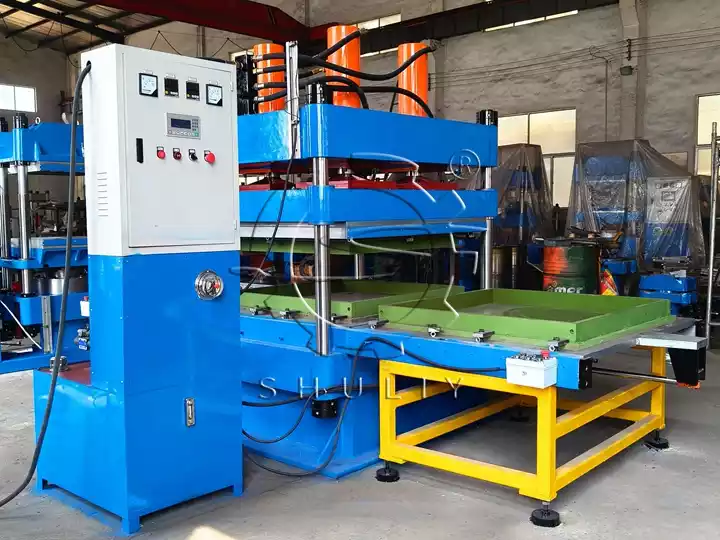
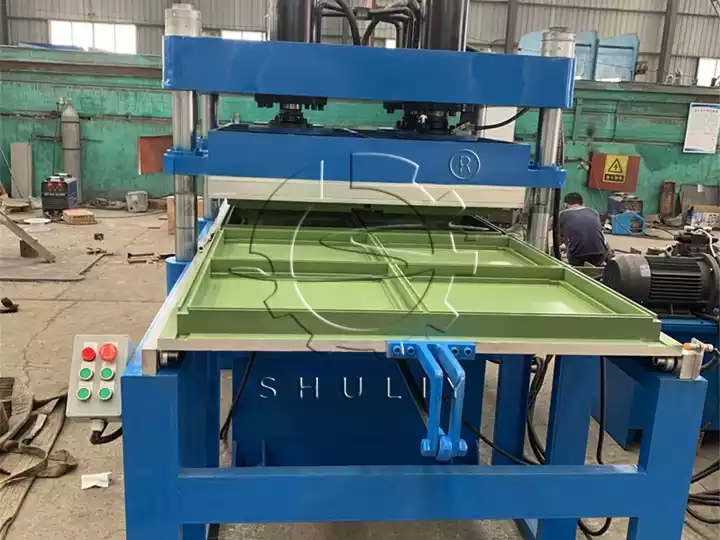
Rubber Bricks forming machine Technical Parameters
| Parameter Item | XLB‑D550×550 (Small 50‑ton) | XLB‑D1100×1100‑1 (Single‑layer 120‑ton) | XLB‑D1100×1100‑2 (Double‑layer 120‑ton) |
|---|---|---|---|
| Nominal Clamping Force | 50 tons | 120 tons | 120 tons |
| Heating Plate Size (mm) | 550×550×45 | 1100×1100×50 | 1100×1100×60 |
| Number of Working Layers | 4 layers | 1 layer | 2 layers |
| Motor Power (kW) | 3 | 4 | 4 |
| Max. Heating Temperature | 200℃ | 200℃ | 200℃ |
| Max. Working Pressure (Mpa) | 20 | 20 | 20 |
| Cylinder Stroke (mm) | 200 | 300 | 300 |
| Applicable Tile Size | 500×500 mm | 500×500 / 1000×1000 mm | 500×500 / 1000×1000 mm |
| Reference Production Capacity | Fluctuates according to vulcanizing time for 500×500 mm tiles | 12‑16 pieces per hour for 1000×1000 mm tiles | Higher efficiency with double‑layer working |
| Control Mode | PLC digital‑screen automatic control | PLC digital‑screen automatic control | PLC digital‑screen automatic control |
| Machine Weight (ton) | 3.5 | 6 | 6.5 |
Note: Actual output is subject to tile thickness, vulcanizing time and raw‑material formula. Data above is for reference under standard working conditions.
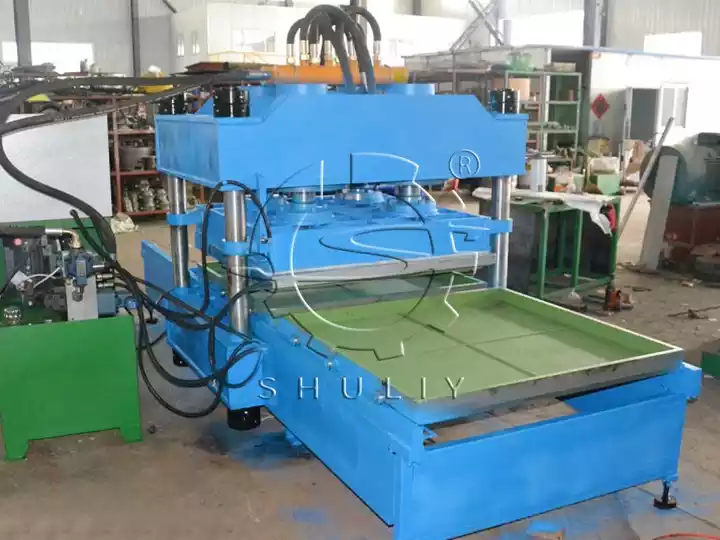
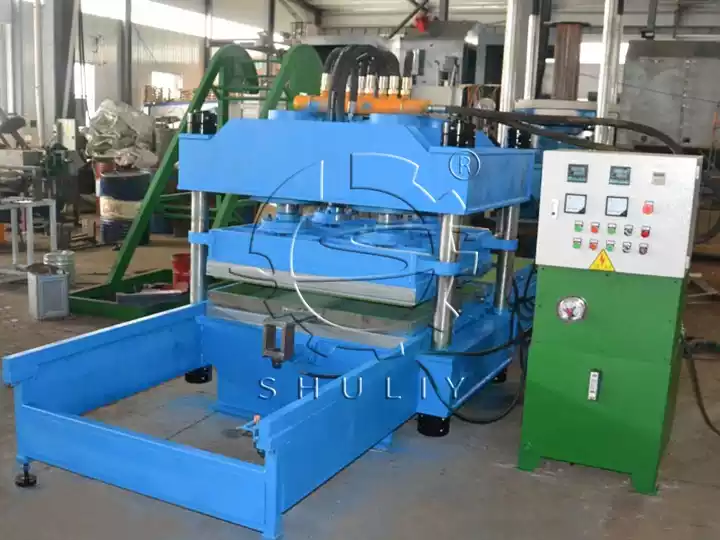
Complete Rubber Tile Production Line Composition & workflow
For a full rubber‑tile project, you can choose standalone rubber tiles making machines or a complete line based on your budget, besides the core vulcanizing press.
- 250# Rubber Granule Mixer: 18 r/min, 3‑5 min per batch, 4 kW. Mixes rubber granules, binder and pigment. Multiple barrels avoid color differences.
- Core Rubber Tiles Making Machine: Hydraulic hot‑press for tile heating, pressing and curing.
- Tile Molds: High‑carbon alloy steel with Teflon coating; custom sizes/patterns/interlocking designs available. Standard set: 1 upper mold + 2 lower molds for cyclic production.
Note: Waste‑tire shredders are required upstream for rubber granules. Skip them if you can buy ready‑made granules locally.
Workflow: Rubber granules + binder + pigment → Mixing → Weighing & filling → Hot‑press vulcanization → Demolding & cooling → Inspection & warehousing
- Mixing: Stir materials 4‑6 minutes. Mix on‑demand as binder solidifies easily.
- Weighing & filling: Weigh materials by tile specs. For colored tiles, lay fine surface granules then coarse base granules and level.
- Vulcanization: Cover with non‑stick cloth and feed into press. Vulcanize 3‑8 minutes; thicker tiles take longer.
- Cooling: Demold tiles and air‑cool on racks.
- Inspection: Check appearance and dimensions before storage.
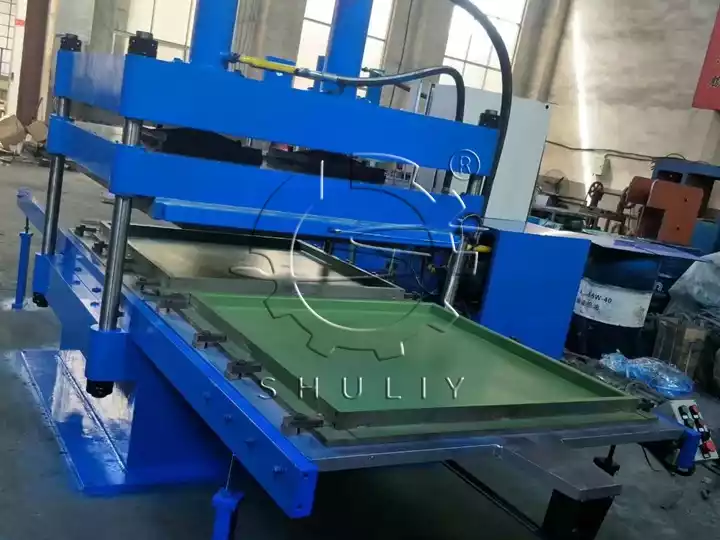
Factory Setup & Profit Analysis of Rubber Tile Plant
First‑time investors are mostly concerned about site, labor and utility costs. Practical references are as follows:
- Plant Conditions: Small‑medium production line needs ≥30㎡ workshop with 380V power and water supply. Equipment can be ready in 3‑5 days.
- Manpower: 4‑5 workers for full line. Operators can work after simple training; hire extra staff for capacity expansion.
- Raw Material Formula: 85‑90% rubber granules plus 10‑15% binder & pigment, for controllable material costs.
- Energy & Maintenance: Power consumption: ~3 kWh per ㎡. Few wearing parts ensure low monthly maintenance cost.
- Environmental Performance: Zero three‑waste emissions, no secondary pollution and low environmental compliance risks.
- Project Returns: Attractive profit margin with short payback period under full‑load production, suitable for SMEs. Higher profits can be achieved by building the full chain from waste tire recycling to tile production.
Key Points for Buying a Rubber Tiles making machine
- Select model by tile size: Pick the 50‑ton unit for 500×500 mm tiles. Choose the 120‑ton single/double‑layer model for 1000×1000 mm tiles. Insufficient pressure causes low‑density, crack‑prone tiles.
- Focus on mold specs: Prefer Teflon‑coated molds to reduce release‑agent usage. Confirm thickness adjustability and support for custom patterns & interlocking styles.
- Verify control system: Select PLC digital temperature‑control models for precise settings. Old relay‑type machines lead to temperature instability and inconsistent product quality.
- Plan for production capacity: Small‑scale workshops can get a mixer + vulcanizing press only. High‑output scenarios need full mold sets for cyclic feeding and higher hourly yield.
- Check after‑sales support: Confirm warranty coverage, installation & commissioning, operator training, and mold repair & customization services.
よくある質問
What tile thicknesses can the rubber tiles making machine make?
Adjustable via mold tooling. Standard outputs:15 mm,20 mm,25 mm,30 mm; max thickness range 10‑45 mm.
Do I need to spray release agent for every run?
Teflon‑coated molds require no repeated release‑agent spraying for easier operation and less consumable cost. Ordinary carbon‑steel molds need release agent per cycle.
Must raw materials be only waste‑tire granules?
Main materials are waste‑tire rubber granules and shreds. EPDM colored granules can be used on surface layers for high‑end colorful tiles.
What is the typical vulcanization time?
3‑8 minutes, depending on tile thickness. Thicker tiles need longer vulcanizing periods.
If you plan to launch a rubber tile manufacturing project, feel free to contact us. We can supply rubber tiles making machine working videos, production‑line layout proposals, and tailor‑made equipment configurations based on your target output and workshop dimensions.
Related Rubber‑Processing Equipment Recommendations
To build a complete waste‑tire recycling chain, you may also consider our supporting rubber machinery:
- Rubber Powder Processing Line: Shreds waste tires into qualified rubber granules and powder, supplying raw materials for rubber tile production.
- Tire Shredder & Crusher: Cuts whole waste tires into chunks for further grinding processing.
- Rubber Granule Mixer: Matches with vulcanizing presses for uniform blending of rubber granules, binder and color pigment.