
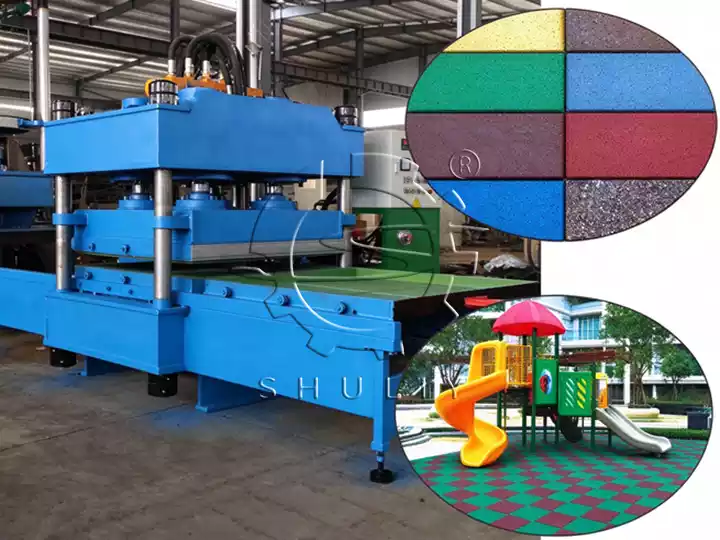
Waste tires are a huge environmental burden worldwide. Discarded tires pile up, occupy land and carry fire risks. But with proper processing, tire rubber granules can be turned into durable, attractive rubber floor tiles widely used in playgrounds, gyms, horse stables and walkways.
The quality of finished tiles largely depends on raw material grading, mixing formula and pressing equipment. A reliable rubber tile vulcanizing press is the core machine to bind rubber granules into solid tiles. This article explains whether recycled tire granules work for premium rubber floor tiles, what affects final quality, and how the production process works.
Are Recycled Tire Granules Suitable For Rubber Tiles?
Yes. Recycled tire granules are the most popular raw material for rubber floor tiles.
- Tire rubber has excellent elasticity, wear resistance and anti-slip performance.
- It costs much less than virgin rubber, improving your profit margin.
- It helps recycle waste rubber, meeting environmental requirements for many regions.
But not all tire granules are equal. Dirty granules with metal fiber, dust or oversized chunks will produce tiles with defects. Raw material sorting is the first critical step before pressing.
Rubber Tile Vulcanizing Press: Core Forming Equipment
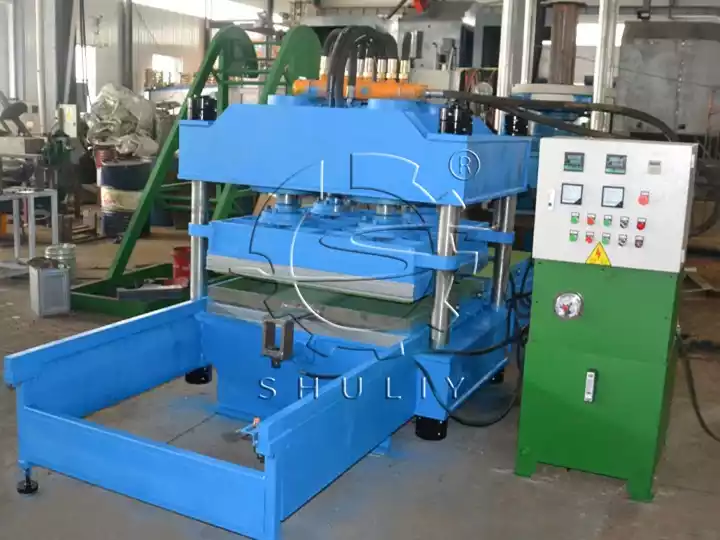
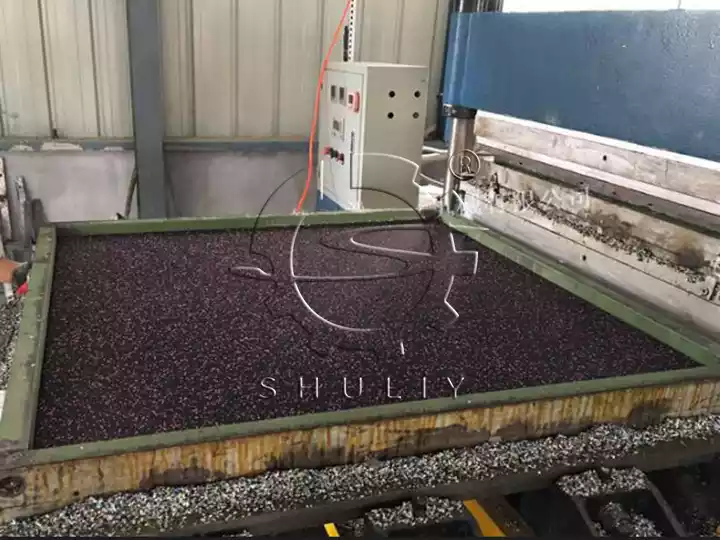
Qualified rubber granules alone cannot make good tiles. You need stable heat and pressure from a rubber tile vulcanizing press to cure the mixture into solid tiles. This machine, also known as our industrial rubber tiles forming machine, applies controlled hydraulic pressure and heating to vulcanize rubber granules.
- It keeps consistent tile thickness, density and surface finish batch after batch.
- It works with different molds to produce tiles in various sizes, colors and textures.
Key Factors Affecting Finished Tile Quality
Even with good granules and a quality press, these points decide whether you get high-grade tiles:
- Granule size: Uniform particle size creates denser tiles. Mixed sizes often cause pinholes.
- Binder ratio: Too little binder leads to easy crumbling; too much binder raises production cost.
- Vulcanization temperature: Too hot will burn rubber; too low results in weak bonding.
- Press holding time: Insufficient curing time makes tiles peel easily.
Common Defects and Simple Fixes
Many new producers run into tile defects. Here are frequent issues:
- Bubbles inside tiles: Caused by insufficient exhaust during pressing. Open the mold briefly to release air.
- Uneven thickness: Check hydraulic pressure and make sure the mold sits flat.
- Tiles easy to break: Improper temperature, short curing time or poor-quality rubber granules.
- Faded surface: Use high-temperature resistant color pigment and mix evenly.
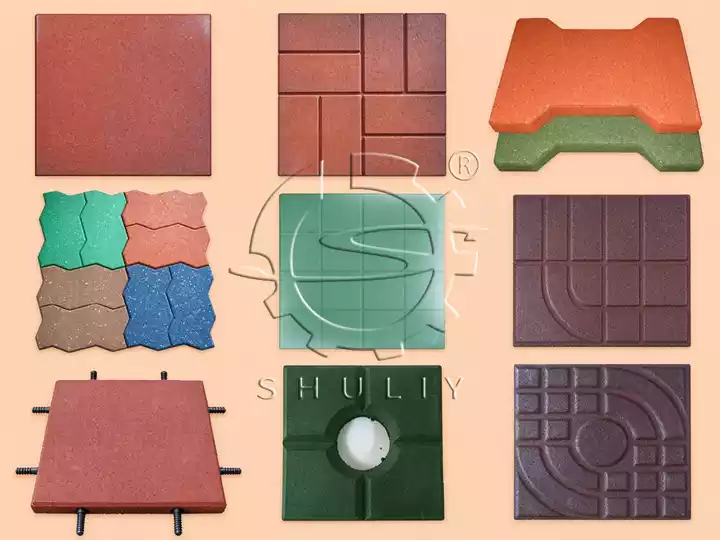
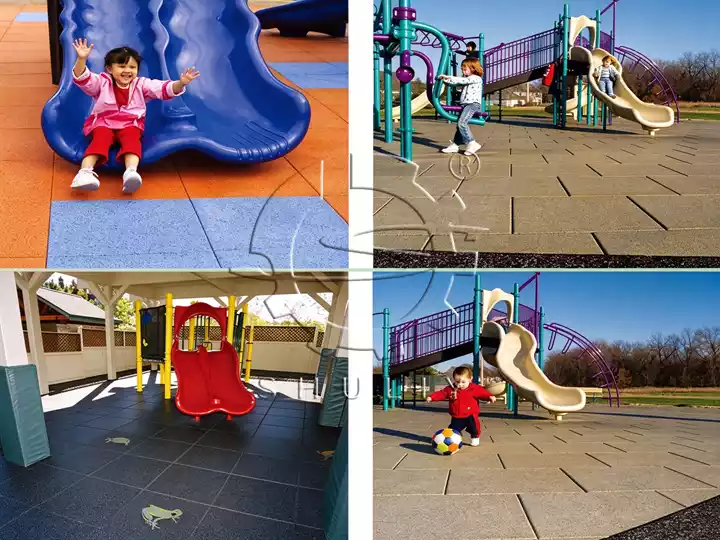
Popular Applications For Recycled Rubber Tiles
High-quality tiles made from tire granules sell well in many markets:
- Children playground safety flooring
- Gym and fitness room floor mats
- Horse stable flooring
- Outdoor garden paths and park walkways
- Industrial anti-slip workshop floors
Tips To Boost Your Tile Production Efficiency
- Clean tire granules thoroughly to remove steel wires and fiber impurities before mixing.
- Test small batches first to confirm formula and vulcanization parameters.
- Inspect molds regularly; worn molds will create rough tile surfaces.
- Maintain the hydraulic system of the rubber tile vulcanizing press to avoid pressure fluctuation.
kesimpulan
Recycled tire granules absolutely can produce high-quality rubber floor tiles. Success relies on clean raw materials, mature mixing formulas and dependable vulcanizing equipment. With a well-calibrated rubber tile vulcanizing press, manufacturers can turn waste tires into marketable eco-friendly flooring products and gain good returns from tire recycling business.