
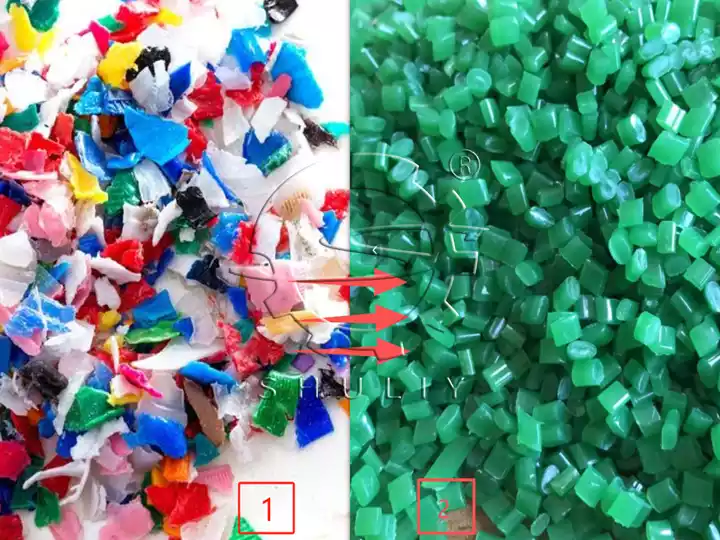
If your recycled plastic pellets turn yellow or black after extrusion, this problem will hurt your product value and customer trust. Many operators of plastic granulation lines meet this trouble frequently. Below we sort out common reasons and actionable fixes.
Common reasons for discolored plastic pellets
- Overheating and thermal degradation: Plastic stays too long under high temperature, or the barrel temperature is set too high. The polymer chains break and carbonize, leading to yellow or black spots.
- Impurities in raw materials: Dirt, paper, glue, paint, rubber and mixed different plastic types will burn inside the extruder and leave black particles.
- Dead carbon buildup inside the machine: Old carbon deposits stick on the screw, barrel, die head and filter. They peel off gradually and mix into new pellets.
- Poor ventilation and moisture: Too much moisture in waste plastic causes steam, foaming and discoloration during melting.
- Improper filter and screen changer setup: If the filter mesh is too coarse or rarely replaced, burnt debris cannot be filtered out.
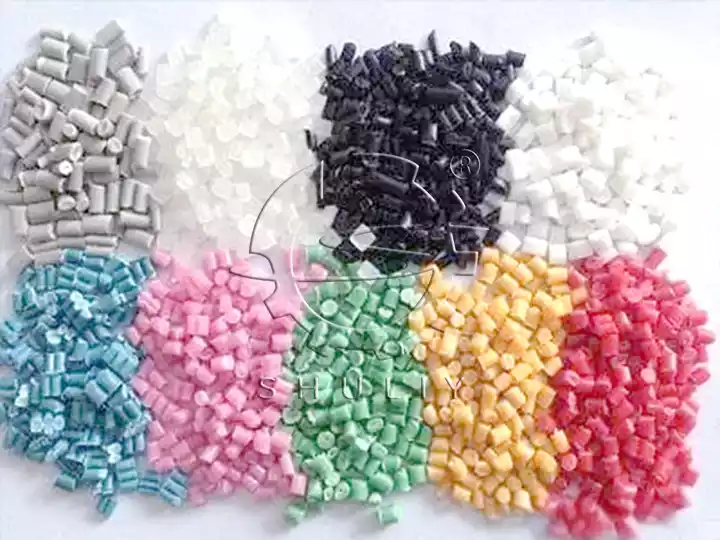
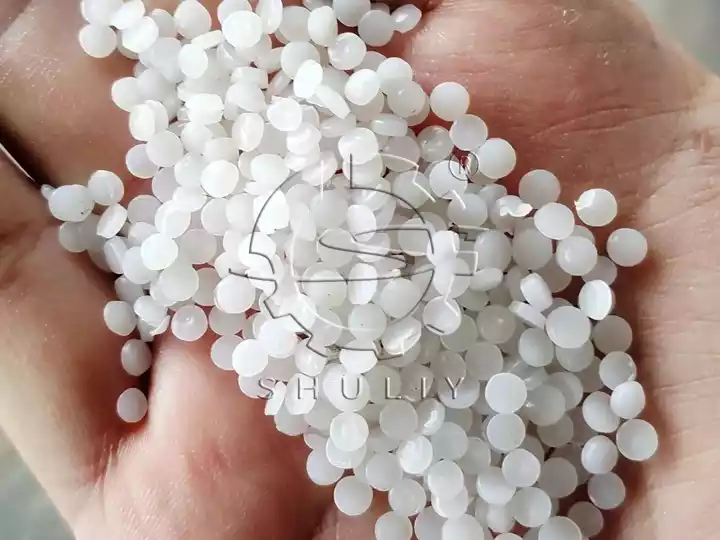
Practical solutions on your plastic granulation line
This section focuses on adjustments you can carry out directly on your plastic granulating recycling production line.
- Adjust temperature profile: Lower the barrel and die temperature properly. Do not heat higher than the melting requirement of your plastic material.
- Control residence time: Avoid long idle heating. Shut down heating quickly once production stops.
- Upgrade pre-sorting: Remove non-plastic impurities, separate different plastic materials before feeding.
- Increase cleaning frequency: Regularly pull out the screw and clean carbon buildup. Purge the machine with clean HDPE/PP material between batches.
- Add drying equipment: Use a dryer to reduce moisture content of waste plastic flakes.
- Use finer filter screens and replace screens on schedule.

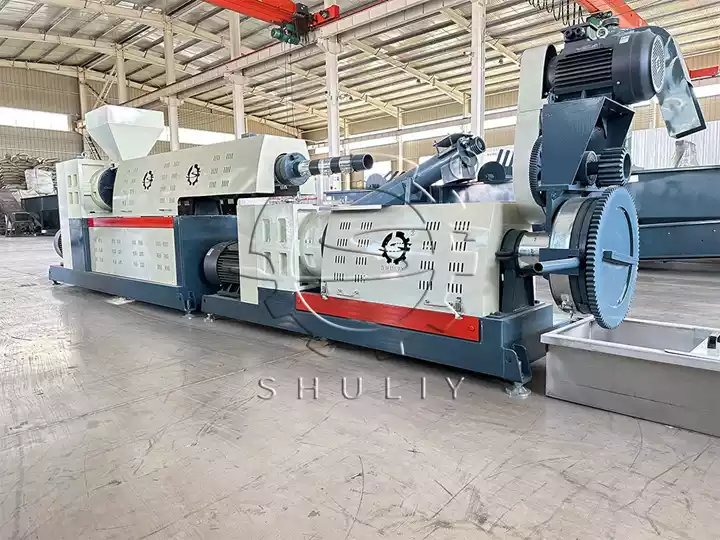
Daily maintenance tips to prevent repeated discoloration
- Record stable temperature parameters for each material formula.
- Do not mix unknown waste plastics randomly.
- Check the heater and temperature sensor regularly; faulty sensors cause invisible overheating.
- Keep the feeding hopper clean, prevent accumulated old material from charring.
- Lubricate and inspect the extruder system periodically.
Final words
Yellow and black pellets are mostly avoidable with stable temperature control, raw material sorting and routine machine cleaning. Small adjustments on your plastic granulation line can greatly raise pellet quality and lower scrap rate. If you often process mixed waste plastic, investing in sorting and drying units will bring long-term benefits.